Pamela Chow, a Houston-based entrepreneur-in-training with roots in Tampico, Mexico, is currently pursuing a double major in Business Honors and Finance at the University of Texas at Austin. Inspired by her family’s entrepreneurial legacy, Pamela is actively involved in The Undergraduate Real Estate Society and the Hispanic Finance Association as she works towards her dream of launching a Real Estate company with her two sisters. Outside of her studies, Pamela finds joy in sports, photography, and adventure. As a volunteer at EGBI, Pamela channels her passion for community engagement by making a meaningful impact through her contributions to events and blog writing.
Pamela Chow shares her experience as a volunteer with EGBI.
What is a fun fact about you?
I have an identical twin sister.
How has working at EGBI benefited you professionally and personally?
As a student at UT Austin, EGBI has helped me keep in touch with the world outside of the classroom. Since I am studying business, volunteering at EGBI has helped me learn from business owners in Austin and learn from their unique experiences in starting a business. It has helped me see the reality of entrepreneurship and learn that all you need is an idea and some support to be successful. Also, I have grown as a public speaker by being part of the Toastmasters club on Wednesdays where I learn the critical skill of public speaking alongside business owners in Austin.
What motivated you to volunteer with EGBI?
One of my older friends volunteered here during her time in college and recommended me to volunteer. She told me it was a great way to gain experience while helping my community.
Are there specific aspects of your volunteer work with EGBI that you find particularly rewarding, and why?
One of the most rewarding work I have done is being able to meet some successful business owners to see how they have succeeded. I find it incredible to find out how they took a leap of faith and with the help of EGBI were able to grow their businesses and succeed.
What personally resonates with you about EGBI’s mission and work?
EGBI prides itself in removing barriers and I personally resonate with this because I find it so important to help those in our community that English isn’t their first language. Coming from Mexico myself, I see how difficult it is to communicate your ideas and message if you can’t speak the country’s native language. EGBI helps remove that barrier by connecting entrepreneurs with workshops and people that speak Spanish are willing to support their growth.
What would you say to someone considering volunteering with EGBI?
The people that work here are amazing and truly care about the work they do. Also, helping small businesses in your community is truly rewarding, and seeing them succeed makes you feel incredible!
EGBI provides training, coaching, and support to aspiring and existing business owners who face barriers to growing a successful business. If you would like to support our efforts, please visit our website https://egbi.org/donate/ or email hello@egbi.org to discuss volunteer opportunities.
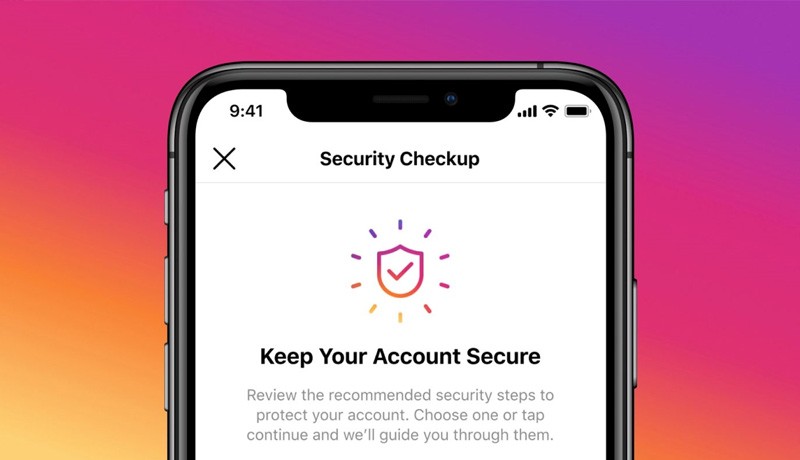
In today’s digital age, protecting your social media accounts is paramount. With the prevalence of cyber threats, safeguarding platforms like Instagram is crucial. This guide offers step-by-step instructions to fortify your Instagram account against unauthorized access and potential breaches.
Step 1: Enable Two-Factor Authentication (2FA):
Go to your Instagram profile and tap the three horizontal lines in the top right corner.
Select “Settings” from the menu.
Scroll down and tap on “Security.”
Choose “Two-Factor Authentication” and follow the prompts to enable it.
Select your preferred method for receiving authentication codes (SMS or authenticator app).
Save backup codes in a secure location for emergencies.
Step 2: Review App Permissions:
Navigate to your Instagram settings.
Select “Apps and Websites” under the “Security” section.
Review the list of connected apps and websites.
Revoke access for any apps or websites that you no longer use or trust.
Regularly audit your connected apps to maintain security.
Step 3: Set Up Login Alerts:
Access your Instagram settings.
Tap on “Security” and then “Login Activity.”
Enable login alerts by selecting “Get Notifications” and choosing your preferred method (email or SMS).
Receive alerts whenever someone attempts to log in to your account from an unfamiliar device or location.
Take immediate action if you receive any suspicious login alerts.
Step 4: Create a Strong Password:
Visit your Instagram settings.
Select “Security” and then “Password.”
Choose “Change Password” and enter your current password.
Create a strong, unique password using a combination of letters, numbers, and special characters.
Avoid using easily guessable information like birthdays or names.
Consider using a reputable password manager to generate and store secure passwords.
Step 5: Stay Vigilant Against Phishing Attempts:
Be cautious of emails, messages, or websites requesting your Instagram login information.
Verify the authenticity of any communication by checking the sender’s email address or website URL.
Look out for red flags such as grammatical errors or urgent requests for personal information.
Never provide your Instagram credentials to unverified sources.
Report any suspicious activity or phishing attempts to Instagram immediately.
By following these step-by-step instructions, you can enhance the security of your Instagram account and minimize the risk of unauthorized access or data breaches. Remember to regularly review your security settings and stay informed about emerging threats to ensure the ongoing protection of your account.
All you need to know to navigate Excel and Google Sheets as a business owner with little to no experience in spreadsheets.
At some point in your business, you’ll need to open up a spreadsheet to do some calculations, build your financial model, answer questions about your sales, analyze your expenses, determine how much to pay your employees and determine how to price your product.
Before you can use any functions, all formulas start with the equals (=) symbol at the beginning. Once you have this, you’re letting Excel or Google Sheets know you want it to calculate something. You can use many different functions in Excel and Google Sheets, but you only really need to know how to use the following functions to do everything.
Basic Math Functions: Plus (+), Minus (-), Multiplication (*), Division (/)
SUM
COUNT
AVERAGE
IF
Basic Math Functions
Like any calculator, you can use basic math functions such as Plus (+), Minus (-), Multiplication (*), and Division (/) within any cell in your spreadsheet. Once you start with an equals sign, you can reference any cell by clicking on it and then going forward with the basic math functions. If you don’t have a cell you want to reference, you can always type in the numbers you want in the cell and then press enter. The result will show in whatever cell you choose to put the formula in.
SUM
Instead of manually using the plus sign for every cell you want to add up, you can use the SUM function to add up a row or column of cells quickly. The SUM function can add your total annual sales and expenses.
COUNT
If you have an inventory list in a spreadsheet and want to count how many of a particular product you have left, you can use the COUNT function to show the result automatically. This way, you won’t have to count it yourself manually!
AVERAGE
You can use the AVERAGE functions to see, on average, how much you spent on expenses this year or how much you sell monthly. Once you know your average, you can use this number to forecast for the future months what you can expect to make.
IF
The IF function is the more advanced function on this list. It’s unnecessary for you to know as a beginner, but it is necessary if you want to use logical formulas. If your business gives out commissions to employees based on sales, you can use the IF function to tell your spreadsheet to calculate the commission amount if sales reach a certain amount. You can also use the IF function to calculate referral fees based on the number of new customers you closed that month.
As your business demands grow, you may need to use even more advanced functions, but the goal is not to show how much advanced Excel knowledge you know; it’s to analyze what story your financials are saying about your business. As long as you can get to the answer, it doesn’t matter if you only use basic functions. All that matters is what answers you can get to determine your next steps in business.
About the author:
Anwuli Chukwurah is a versatile finance professional with a track record of starting new finance organizations and scaling them for growth in fast-paced entrepreneurial environments. She has over 6+ years of experience working with small business owners, startups, and nonprofit organizations to help connect finance with their business goals. She aims to ensure her clients become comfortable and adept at navigating their numbers. She works with clients at Woolichooks and writes a newsletter for non-finance folks.
Congratulations my dear fellow entrepreneur. You have done what most people just talk about! You have taken the leap and ventured on your own! It’s an exciting journey, but it’s also normal to experience self-doubt and fear along the way. While these feelings can make even the most confident entrepreneur hesitate, they can also be converted into your motivational tool guide.
Wondering how?
Here are 5 powerful tips to help you conquer self-doubt and fear, and propel your business forward:
1. Remember Your Why: What ignited your passion to start this business? Reconnect with your core purpose. Was it to solve a problem you care about? Leave a legacy? Focusing on your “why” will reignite your drive and fuel your confidence. Remember the problems you will solve and never let that purpose be out of sight
2. Focus on Progress, Not Perfection: Even the most celebrated expert was a novice once. This country is full of such novices becoming experts through sheer consistency. Every step forward, every hurdle cleared, is a victory. Focus on continuous improvement, learn from mistakes, and keep moving forward.
3. Find Your Tribe: You are known by the company you keep. Surround yourself with supportive people who believe in you and your business. This could be a mentorship program, online communities for female or minority entrepreneurs, or even a mastermind group of local business owners. Sharing your challenges and celebrating successes with like-minded individuals is a powerful way to combat self-doubt.
4. Embrace Continuous Learning: The business landscape is constantly evolving. Commit to lifelong learning – take online courses, attend workshops, and read books and articles on relevant topics. Most importantly learn from every mistake and set back. Embracing a learning mindset will help you get more confident while navigating challenges and making decisions.
5. Practice giving and gratitude: It’s important to learn to give before you can get. Focus on what you bring to the table, what problem you will solve, who will smile because of you today. Also take a few minutes each day to reflect on the things you’re grateful for in your business journey. This simple exercise can boost your mood and combat negativity.
Remember, you are not alone. Every successful entrepreneur has faced self-doubt and fear. By implementing these tips and believing in yourself, you can conquer these challenges and build a thriving business.
Pavielle Babai-Pirouz is the owner of a bustling pedicab business, High Tech Hippie, in Austin, Texas, where she oversees a fleet of pedicabs rented out to drivers. Pedicabs, essentially bicycle taxis, provide a unique and eco-friendly mode of transportation around the city. Pavielle’s journey began in 2008 when she started as a pedicab driver herself. In 2021, fueled by her years of experience and knowledge, she made the leap to start her own company. Seizing an opportunity, she acquired a pedicab business that was being sold, instantly expanding her fleet to 32 pedicabs to begin her journey.
Pavielle shares her experience as an EGBI client.
How did you hear about EGBI?
I was looking for an accountant and my accountant recommended EGBI. I needed help organizing my money flow. While I could manage it myself being a small company, I needed assistance in learning how to do it effectively.
How has EGBI helped you?
EGBI has been instrumental in various aspects. They taught me accounting, how to build a website, and even how to hire a lawyer. Moreover, they helped in connecting me with the Chamber of Commerce, which is quite similar to EGBI in terms of networking for entrepreneurs. However, the Chamber of Commerce mainly deals with established businesses rather than EGBI that works with both ideas and established business owners. I attended all the workshops they offered.
What are you working on now?
Currently, my business has outgrown its current property, so I’m looking to expand to a new location. In the pedicab industry, the drivers pay me in order to rent the pedicab. To make it more appealing for drivers to choose my company, I plan to offer better amenities at the new facility, like air conditioning, showers, and even bunk beds for naps. This new shop could also serve as a landing place for drivers coming from out of town for events in Austin.
What inspired you to become an entrepreneur?
The freedom that comes with entrepreneurship was a big inspiration for me. Being able to set my own schedule and pace was something I valued, which I experienced as a pedicab driver. Initially, I was terrified to start my own business due to fear of failure and self-doubt, especially with challenges like reading difficulties. However, technology and mentorship from the previous owner helped me overcome those hurdles.
What’s your biggest challenge?
Managing drivers is one of my biggest challenges. Many of them have diverse interests in their lives, and some aspire to be musicians or pursue artistic endeavors. Balancing their aspirations while maintaining the efficiency of the business can be a delicate task. It’s important to maintain respect and understanding, especially when dealing with individuals with artistic inclinations.
What advice do you have for aspiring entrepreneurs?
My advice would be to embrace criticism and feedback, even from those who may sound like they’re tearing you down. I learned to convert negative feedback into something positive, acknowledging problems and working to address them. Worrying about things that can change is futile; instead, focus on making those changes. And for things beyond your control, learn to accept and adapt without unnecessary worry.